Dismantling of wind blades in Montes de Cierzo repowering project
Circular economy in renewable energy
One of the energy transition’s primary benefits is to slow global warming. But it can’t do that sustainably without committing to a circular economy. That’s the context behind Statkraft’s mission to manage the challenges and embrace the opportunities in becoming a circular business by 2050.
Closing the loop: a commitment to a circular economy
The global population is consuming resources at an unsustainable rate, and it’s accelerating. The truth, of course, is that the energy transition (and by extension the renewables industry) also generates waste during the lifecycle of power plants.
Clearly, this is a problem in need of a solution. So, what is Statkraft’s role in implementing a circular economy in renewable energy?
Waste not, want not: using resources responsibly
Statkraft’s ambition is to become a circular business by 2050. Let’s break down what that actually means, and why we’ve chosen it as an ambition.
First, what is a circular business? In short, it’s a business that optimises its resources and aims to maximise their value. A circular business prioritises based on deep understanding of resource inflows and outflows, and systematically assesses what the risks, impacts, and opportunities are for the resources it uses.
To become that, we’ll need to take some actions. Among those is prioritising certain materials that we use in large quantities or are very energy intensive (for example concrete or steel). We can then focus in detail on what impacts they have, and what risks they represent over their lifetime.
Another thing that defines a circular business is how it continually looks for opportunities – that can be found in innovation, but also in collaboration. Successful circular businesses can’t afford to be individualistic. Their success hinges engagement and collaboration with other parties or stakeholders.
Quantification, opportunities, and closing loops
Of course, if we can’t measure something, we can’t improve it either. That’s why quantification is very important in this work. The right data will be vital for us to be able to better understand the journey of these materials through the value chain (basically, their journey from being produced to being operational at our plants, all the way to their ‘end of life’).
Part of this work includes finding opportunities to re-incorporate materials into the economy after their use. This could be, for example, turbine blade materials that could be given new life as furniture (this is actually the case with some of the waste from our repowering project in Montes de Cierzo, Spain).
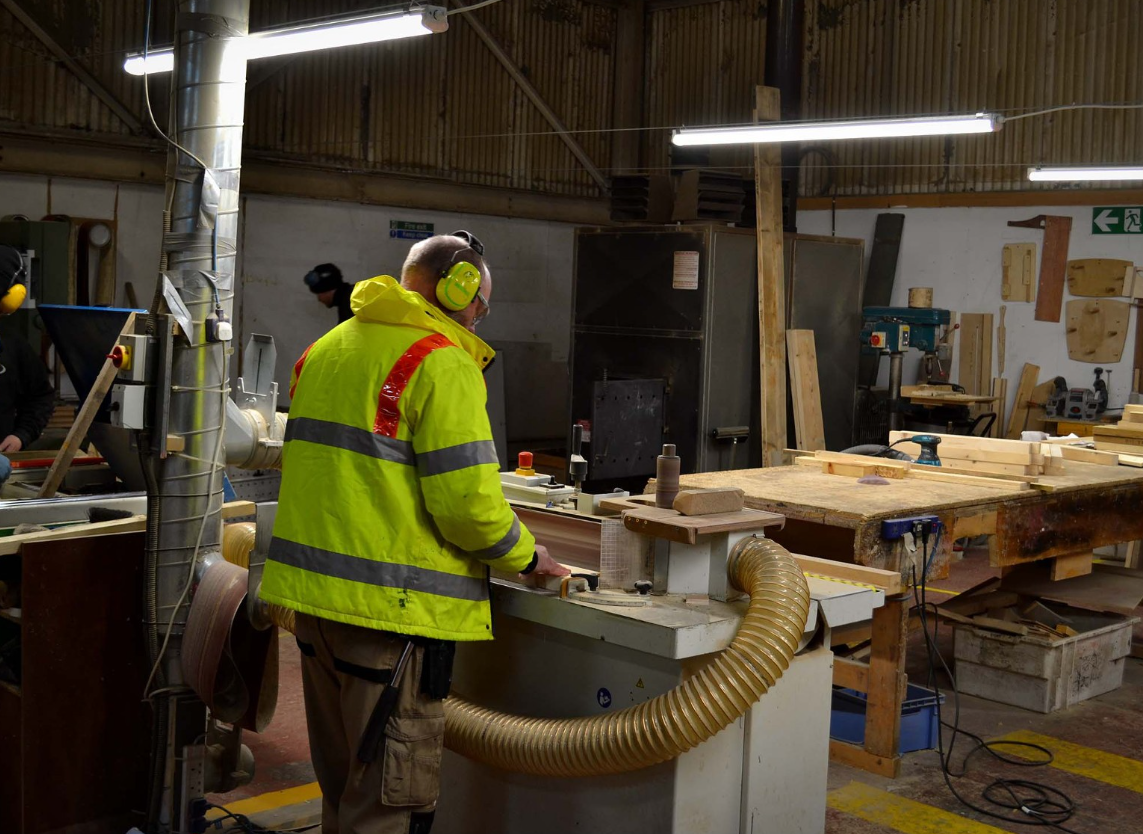
Circularity, though, is much more than recycling. A key part of our work is closing loops in a way that helps us keep materials in the economy at their peak value for as long as possible. This could involve extending the life of our plants and ensuring reuse of parts and remanufacturing equipment. In the UK, for example, the charity and social enterprise, Glasgow Wood, received waste wood from our Neilston Greener Grid Park to turn into furniture and other accessories.

Dive deeper into our sustainability strategy
If you’re curious to know more about our approach, targets, actions and policies behind our sustainability work, you can dive deeper in the Sustainability section of our Annual Report.